
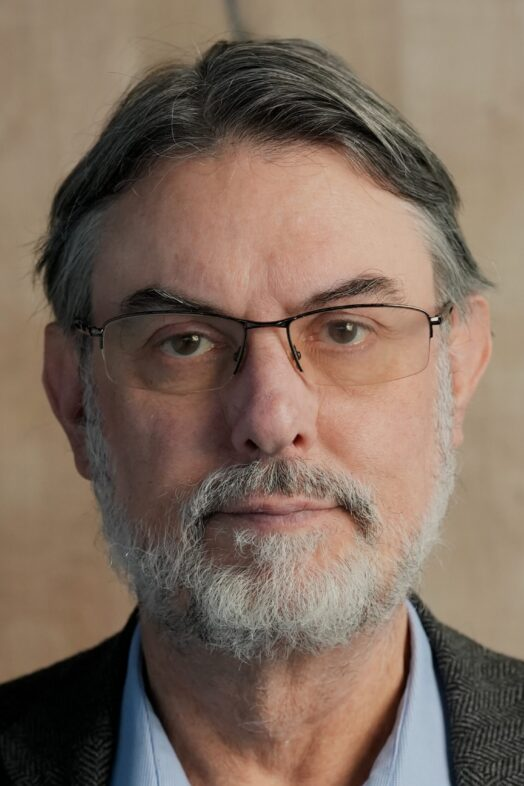
Anatol Lieven is a British political scientist, historian, political analyst, and former journalist. He currently serves as director of the Eurasia Program and holds the Andrew Bacevich Chair in American Diplomatic History at the Quincy Institute for Responsible Statecraft. He is one of the most authoritative voices advocating for military restraint, diplomatic engagement, and the transition from U.S. unipolar supremacy to a multipolar, realist global strategy. A heavily abridged version of this interview was recently published by il manifesto. It was given right after the Americans partly limited Starlink protective coverage over Ukraine.
Following Trump’s about-face on Ukraine, what are the parameters for a possible agreement?
Starlink has been fully restored. We can’t, of course, be sure that’s true, so much of the news is so confused and contradictory. But it doesn’t appear that Ukraine has, in fact, been completely cut off. If the Trump administration were totally to cut off Starlink, then fairly rapidly the Ukrainian war effort would collapse because Starlink is vital to their communications and also, of course, to intercepting Russian missiles. But that hasn’t yet happened. Now we have another, it seems quite determined, peace initiative by the Trump administration. But, on the one hand, the Russians are still demanding something that the Ukrainians all tell me they simply cannot give, which is voluntary withdrawal from the whole of the Donbas. They still hold only a very small part of the Donbas now. And frankly, for both sides, this is a prestige or moral issue. Obviously, more legitimately on the Ukrainian side: Putin, it seems, needs this territory in order to be able to declare victory in what has, in many ways, been a disastrous war for Russia. The question is, is there anything that the Ukrainians, well basically that the Trump administration, can propose and force the Ukrainians and the Europeans to agree to, which could get Russia to drop that demand? That, I think is the key issue now. As the former Ukrainian commander in chief, General Zaluzhnyi, has said in public a few weeks ago, Ukraine is never going to get into NATO. Mind you, Zelensky said that way back in 2022. So, a treaty of neutrality is not, actually any great sacrifice, nor are European countries actually going to send their troops to Ukraine, if only because they haven’t got any troops. And most countries in Europe have already said they will not send troops. What are you left with? Especially if Le Pen wins the next French elections. Rassemblement National declared categorically they will not send French troops to Ukraine. So that leaves the British, who have one brigade, but there are other issues. . . Perhaps most difficult for the Ukrainians is the issue of guaranteeing Russian language rights in Ukraine. Now, that shouldn’t be an issue for the European Union. Several members of the European Union have, guaranteed minority rights for languages, including Finland, for example. But of course, for the Ukrainian nationalists, the ethnic nationalists, this is an absolute red line. So we will have to see.
The country will have to overcome a very harsh winter.
If this goes on, many more people will probably flee to the West, including the workers on whom Ukraine’s military industrial sector depends. And the Ukrainian economy and infrastructure will suffer more and more damage. According to the world Bank, just to reconstruct Ukraine, let alone prepare it for possible membership of the European Union, the bill now stands at €588 billion. Where is that going to come from, given the present budgetary constraints in Europe? By the end of the winter it could be a trillion. But, on the other hand, although Russia is doing tremendous damage to the Ukrainian economy much more than Ukraine is doing to the Russian economy, the Russian economy is suffering too. And also, the Russian army is only advancing very, very slowly on the ground. That could change. If America cuts off Starlink and satellite intelligence, it will change. It will be the end for Ukraine. But if not, would the Russians really be prepared to go on and on and on? With tens of thousands, maybe hundreds of thousands more dead to conquer less than 5000km² of territory? Maybe they will. Putin is clearly very unwilling to launch mass mobilisation, or mobilise the whole of the economy behind the war because he knows that would be very unpopular in Russia. So the Russians are also facing serious constraints.
According to the liberal playbook, based on the moral superiority of democracies and the impossibility of equating the attacked and the aggressor, Putin only knows violence and will not stop without constant resistance. In your opinion, will he stop if given the chance to break through?
No equation between the attacker and the attacked? I suggest you tell that to the Iranians or the Palestinians or the Libyans or the Iraqis. The West has no moral standing in the rest of the world. None. Zero. It’s gone. This is a story we tell to ourselves, as far as territorial compromises, and so forth, we’ve done it again and again. We accepted it in Cyprus with the Turks. We backed it in Kosovo. It is just possible that some of these people believe they are representing morality and so forth, but there’s no reason for anyone else to take this seriously. “Putin only understands the language of force:” this isn’t liberal, it is a classic racist argument. Johnny Chinaman only understands force. These mad mullahs, they only understand force. The Abyssinians, these uncivilized people who can only be civilized by force. We’ve heard this again and again. Now, of course, Putin is willing to use force, and so has the United States and Britain in the past. Well, sorry, not in the past. Today. So are a very great number of countries around the world. No. Putin is willing to use force, but he also, for a long time, was trying to work out peaceful arrangements with the West. But together with what he and, it must be said, pretty much the whole of the Russian establishment and the great majority of ordinary Russians regard as the defence of vital Russian interests. Now, one of those interests should not be difficult, for Americans or indeed Europeans to understand, because it is precisely the Russian equivalent of the Monroe Doctrine. America will never accept a hostile or potentially hostile military alliance appearing on its borders. And America has resorted in the more distant past to outright invasion, and more recently, of course, to subversion, coups, massacres, economic blockade in the case of Cuba continuing to this day and now intensified under Trump in order to prevent that. And we all know that if the Chinese were foolish enough – which they won’t do because they’re far too sensible – to make a military alliance with a state in Central America, that state would be destroyed by the United States very rapidly indeed. And of course, all the European governments, as we have seen this in the failure to respond to the kidnapping of the president of Venezuela, the new sanctions on Cuba, all the European governments have accepted that. They’ve accepted America’s sphere of influence in Central America and the Caribbean. And that is because they recognize that the American establishment regards this as a vital interest and will do everything necessary to defend it. The problem is that we have never understood or chosen to understand this. Many people have, of course, including Bill Burns, who was the US ambassador to Moscow and then under Biden, the head of the CIA. He understood it and reported to Washington. He’s published it himself. And so is the State Department saying that keeping Ukraine out of NATO was the reddest of red lines, and that this wasn’t just Putin. The entire the whole of the Russian establishment was behind this and for what ought to be very understandable reasons. And the fact that, the Russians have gone to war to prevent Ukraine joining the Western military alliance. And yes, this is also related, of course, to ethnic issues, language issues, historical issues. And this in no way indicates that that the Russians have an intention of attacking the Baltic states or Poland or Romania. Russians, even the most hard line Russians, who say that we must recover Odessa, for example, say that a direct attack on NATO would be ridiculous. Why should we do it? What could we possibly gain compared to the risks involved? Now, of course, there are things that the West could do. Above all, as Putin has stated, if we were to blockade the Russian exclave of Kaliningrad, or actually, rather than intercepting Russia’s shadow fleet, block the Baltic to Russian exports, well, that would be an act of war. And in that case, well, certainly, if there were a threat to seize Kaliningrad, the headquarters of the Russian Baltic Fleet, the Russians would use tactical nuclear weapons. No question whatsoever. Everyone says that this is not Putin’s bluff. Every single member of the Russian establishment with whom I’ve spoken has said that. So we better take it seriously.
The “Western Front” is disjointed. There is a serious gap between public opinion and the rulers.
Well, the Europeans haven’t let Ukraine down yet. It is essentially, well, not only European money that is keeping the Ukrainian state going. It’s not just paying for the war effort. It’s paying for the entire Ukrainian budget in effect. Now, there are two problems here. The first is that the Europeans are still buying American weapons for Ukraine, but due to Trump and Netanyahu’s war on Iran when it comes to certain key categories of weapons, the Americans no longer have ones to give, unless they strip their forces elsewhere. And that’s above all true, of course, of patriot, anti-ballistic missile systems. So the Europeans are still prepared to pay. But the American supplies are not there. And of course, if you look into the future, the Ukrainians are now saying that they need another 27 billion euros this year, on top of what they’ve already received. And in France, six months from the elections, Marine Le Pen has said that if she wins, as now looks very likely, especially after the French riots, she will cut French aid to Ukraine. Now that might be a complicated process because of course it’s part of the whole EU package, but that clearly indicates that in the longer term, European financial support, at least in the necessary levels, simply cannot be guaranteed. The problem is that the European leaderships, the establishment, spent years talking to themselves into positions of unconditional support for Ukraine and also peace terms that never were peace terms, because they were totally unachievable. Complete Russian withdrawal from all the territory that it had seized since 2014? That was never going to happen. Never, ever. And of course, that meant that they passed up previous opportunities to try for peace when Russia was in a weaker position and might have been prepared to agree. Now Russia is in considerably stronger position and of course, is insisting on harder terms. But if I still think it possible that if the Europeans were to offer things in other areas, a sanctions relief amongst them, some agreements on mutual force limitations, neutrality, insistence on Ukraine meeting what are after all, European Union standards for minority rights, then there might be the basis for a peace agreement. Because otherwise, what Russians say to me is that Russia can capture the whole of the Donbas, as a result of a six months, God forbid, a year more of grinding war with heavy casualties – and of course, with the US 2028 elections approaching when if the Democrats win, then US support for Ukraine could really go up again – But if that’s how the Donbas falls at that point, they think Putin would be willing to propose peace if the other essential Russian conditions were met. But of course, if the Ukrainian front collapses, and it’s impossible to say really – this war has demonstrated changes in warfare so great that it’s very difficult to predict anything by now – but if the Ukrainian front collapses, then the Russians will, of course, take whatever they can.
European reporting on the conflict can only be defined as propaganda. The BBC website, it’s three weeks now, run a piece basically calling for national awareness of the fact that the country is at war, if not already, but will inevitably, teleologically end up in a war with the Russians.
Well, some time ago I was interviewed by a BBC journalist about not the so-called hybrid threat to Britain from Russia, but a direct conventional military threat. And I said to her, look, given the fact that Russia has spent three years trying to capture small towns in eastern Ukraine, given that the Russian Black Sea fleet has been defeated by the Ukrainians who don’t have a navy at all, purely using land based drones and missiles, how can you seriously believe this? And her reply was, well, but we’re told that they are. We are told that they are. This, I’m afraid, is much of contemporary Western journalism. The British Ministry of Defence and the Secret Service tell them things and they republish them. I was a journalist myself for many years, including for the BBC. It is a very sad state of affairs. I’m of a certain age, and of course, when I was working as a journalist, interviewed people who were a good deal older, including my parents and my uncles, people who had gone through the Second World War, had fought in the Second World War. Now, they would never have made the mistake of saying that, because there have been some small, very small acts of sabotage, and so forth and so on, that we are at war with Russia. They would have said, believe me, if we were at war with Russia, we would know about it. Because, after all, during the Cold War there were also acts of sabotage on both sides, assassination, proxy wars elsewhere in the world. But we didn’t get into a real war. And I think as well, you mentioned the difference between, European elites and the ordinary population. I think to judge by the opinion polls, most ordinary Europeans do understand that very well because they don’t feel this effect of Russian attacks. As a British friend remarked to me, when Starmer, the previous Prime Minister, said that Russians are a threat on our streets, he said, well, they must have been talking about Russian parents double parking in London when they deliver their kids to British private schools. Russians a threat on the streets of London? Please. But of course, the security elites have worked themselves into a frenzy, partly because there is an argument that we’ve all let our militaries decline to a really radical extent. And it’s pretty clear. And if you talk to some of them in private, who will actually acknowledge this, that the only way of getting European parliaments and publics to pay for higher military spending in circumstances of acute budgetary pressure is to convince them that the Russian bear is coming to eat their children. That doesn’t make it true.
The EU is turning out to be something of a diplomatic and geopolitical dwarf in this situation. Western European politicians do not cut a dignified enough figure. How could they regain some credibility?
Well, first, a good start would be to fire Kaja Kallas, who has really, transferred Estonian historical grievances to the European Union. I myself think that the European Union as an institution is hopeless in this regard because, it has been jockeyed into taking up all these positions against Russia and sanctions and now finds itself in a position where it can’t get out of it again, because, of course, the Poles and the Balts and indeed the Swedes and some others will veto it. So I’m afraid it has to be, the three biggest countries, the so-called E3. Britain, Germany and France. Britain and Germany are hopeless. France may well change quite considerably if Le Pen wins the next French elections. And if France defects from this alliance, then it’s difficult to see how the other two can keep going. Burnham in Britain has already said that he will not prioritize military spending over health and social welfare. Of course, a very good reason is that higher military spending will not win him the next British elections, whereas further cuts to the health service and social welfare will certainly lose him the next elections. And so I think that, with time, large and simply because of money, the European position will crumble. But it is also of course, because of the scenes of mass violence on the streets of Europe, look at Paris and Lyon and Marseille and Milan.
One final thought.
I should say in conclusion that neither I nor my institute are in favour of abandoning Ukraine. We always denounced the Russian invasion from the start. We are actually in favour of sanctions against Russia, but only, of course, if these form part of a strategy for peace. If we can use this as a bargaining counter and be prepared to lift them in return for a peace settlement. What we now have is, as you said previously, people who go on and on about how we are defending morality and the rules based order, and Russia must be punished. And this is a recipe for unending war, which Europe will not pay for in the long run, and therefore which Ukraine will lose and will be in a much, much worse position afterwards.


