After the last few days’ flagweaving hangover (with more to come); after watching like so many others the game the other night; and lastly, after observing once again the undeniable inability to reach world-level quality by the English team – whose lacklustre performance not even the admirable heart and dedication to the cause of victory, nor the advent of a reasonably paid national coach could redeem – a consideration dawned on the perfectly football-ignorant person that I am: what if, after all, the problem rested with the fact that England is a small – numerically speaking – nation? Continue reading “England vs Italy: an afterthought”
Category: in english
Strategia dell’informazione

Un pezzo sulle “Nuove Brigate Rosse”, uscito nella sezione Comment is free del Guardian.
It was a moment straight out of an old television documentary: only it was coming from a 2012 Italian court. Last Tuesday in Milan, during the appeal hearing of 13 suspected members of a group linked to the New Red Brigades, one of the main suspects, Alfredo Davanzo shouted: “This is the right moment, ahead with the revolution, long live the revolution!”
Santa Claus(i)
Yeah Santa Claus Where have you been?
I’ve been waiting here Just to let you in
Yeah Santa Claus What you got on your back?
Is there something for me inside that sack?
I want a brand new car
A twangy guitar
A cute little honey
And lots of money
Santa Claus Won’t you tell me please?
What you gonna put under my Christmas tree?
And he just said
Nothin’ nothin’ nothin’ nothin’
Yeah Santa Claus
I’ve been waitin’ oh so long
Now don’t you, don’t you do me wrong
I want a brand new car
A twangy guitar
A cute little honey
And lots of money
Santa Claus Oh won’t you tell me please?
What you gonna put under my Christmas tree?
And he just said
Nothin’ nothin’ nothin’ nothin’
Oh no
Oh no no no
Nothin’ for Christmas
No
Oh no
I got nothin’ for Christmas
No no
Oh no
I get nothin’ at Christmas time
Get angry and stop
Mario Monti cuts a striking figure in the new Italian parliament. He and his acolytes seem like an abrupt epiphany of asceticism, measure and style on a stage until now populated by sad commedia dell’arte characters.
It is a weird mix of feelings to see the old Democrazia Cristiana miraculously rising from its pre-tangentopoli ashes and slowly reclaiming its territory. It is the rétour eternel of italian politics, the reshuffle, reinvention, resuscitation of the good old Centre. But trust me: it is a huge relief to see that, eventually, the ludicrous bandwagon the old Italian government ended up becoming has finally gone. It a relief that largely outdoes the retrospect anger at what their (the DC’s) regime did cost to the country since the birth of the Republic.
We don’t know if this is the beginning of the Third Republic, (a terminology evoking ruthless comparisons with the French original), and frankly at this stage it does not sound particularly important, either. It is the end of politics. Not as a concept, or as a strategy: we all know too well that there is no such things as “apolitical”, or a 100% technical. But as something operating a possible dialectical mediation between “the Markets” and the rest of the complexity of the human horizon. It is interesting to observe how, in time of crisis, capitalism deploys his paratroopers, the bankers, at the helm of sovereign countries that are about to collapse under the weight of the neoliberal edifice they had been cemented into. It is a more straightforward measure that the one previously implemented, that is, the one that entails operating via a network of influences and by lobbying.
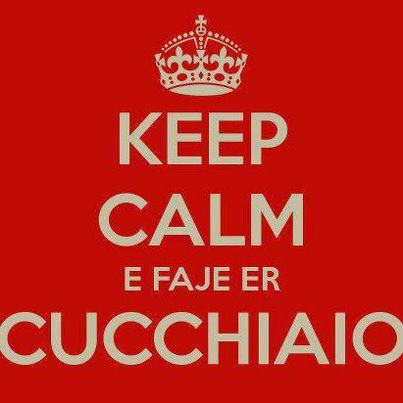
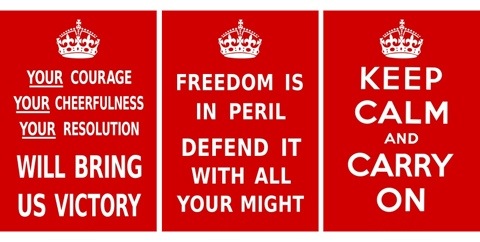
During the Blitz, here in the Uk there was the slogan “Keep calm and carry on” conceived with the intent of, supposedly, boosting the morale of the heavily bombed British and London populations. I think it would sound entirely inappropriate for present-day Italy. What we need is more something like “Get angry and stop”.
Police and Thieves
Police and thieves in the streets
Oh yeah!
Scaring the nation with their guns and ammunition
Police and thieves in the street
Oh yeah!
Fighting the nation with their guns and ammunition
From Genesis to Revelation
The next generation will be hear me
From Genesis to Revelation
The next generation will be hear me
And all the crowd come in day by day
No one stop it in anyway
All the peacemaker turn war officer
Hear what I sayPolice and thieves in the streets
Oh yeah!
Scaring the nation with their guns and ammunition
Police and thieves in the street
Oh yeah!
Fighting the nation with their guns and ammunition
From Genesis to Revelation
The next generation will be hear me
And all the crowd come in day by day
No one stop it in anyway
All the peacemaker turn war officer
Hear what I say
Police, police, police and thieves oh yeah
From Genesis oh yeah
Police, police, police and thieves oh yeah
Scaring and fighting the nation, oh yeah
Shooting, shooting their guns and – guns and ammunition
Police, police, police and thieves oh yeah
Scarin’, oh yeah
Scarin’ the nation, oh yeah
Police, police, police and thieves oh yeah
Here come, here come, here come
The station is bombed
Get out get out get out you people
If you don’t wanna get blown up
(il pezzo e’ un classico reggae di Junior Murvin)
Music to procreate by
No, this is not a post about Barry White, his status in contemporary pop music being far from debatable. It is about the solo record of a friend, and as often with friends involved, you may excuse the cheeky bias in its favour. But is a great relief, while rereading it over and over, not to feel the need to raise an eyebrow: I can stand by it anytime, so much I enjoy it. It is not a review, despite the format and the tone might suggest the opposite; rather a bunch of reflections jotted down with the record looping.
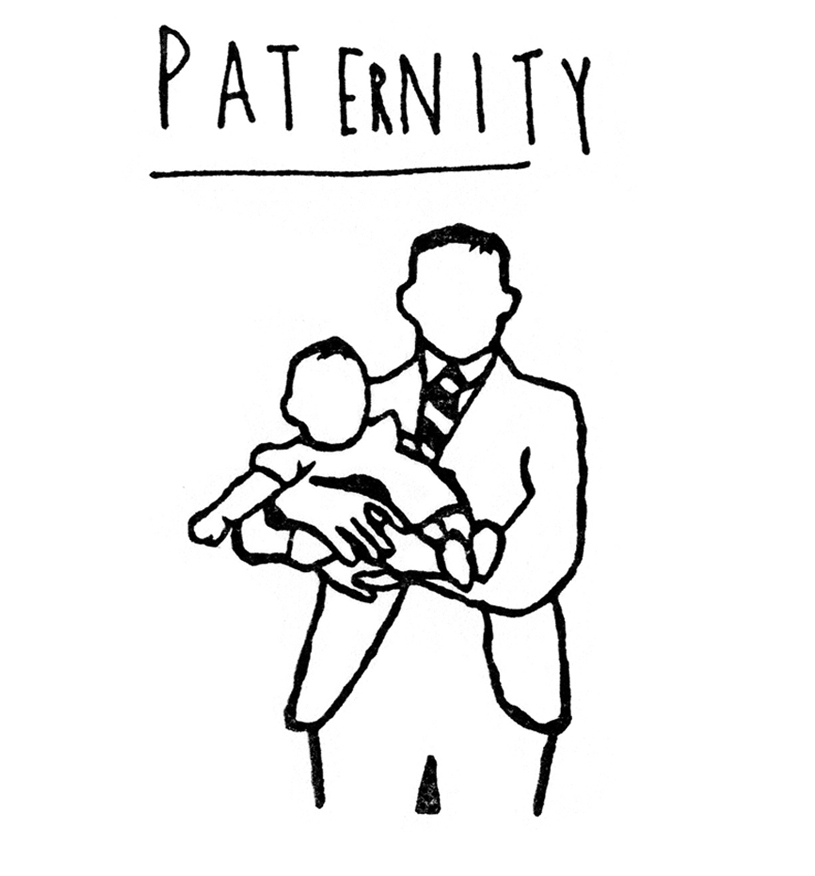
Whereas, long ago, a good artist had to provide certainties, today he can get away with being “only” a good questioner: the crushing duty of coming up with the (always provisional) answers rests on the scientist’s shoulders. Well, in Paternity, Chris Cordoba’s first solo album, Jack Adaptor’s guitarist does exactly that: he fearlessly asks big questions. He achieves that without uttering a single word, by letting his guitar – augmented only by a succinct palette of sounds and effects – carrying out the job. The result is a very nocturnal record, full of all the shades that inhabit the night: from pitch dark to the sparse, dim brightness of dawn, from the emptiness of silence to the liquid feeling of distant echoes.
The guitar is the sole protagonist here, intended as a searching tool rather than phallic vehicle of virtuoso autism. The latter trait makes of Cordoba a 360 degrees musician rather than a guitarist’s guitarist. Neither does the much-abused term “ambient” any justice to this collection: these tracks contain the attentive listening of a multiplicity of directions by a sensitive ear. Then of course there is the biographical element of becoming a father. Cordoba has pushed that to the forefront, but fatherhood is only a unifying element, not the cause and effect of this music. These are, in my humble opinion, life itself, whose complexity and burden we are, here in the West, getting used to embrace at an increasingly later stage. It is a record about the intensity of being alive and of eventually acting as a channel to life, but stripped bare of the self-indulgence and navel-gazing that often come with such experience.
The numbers here go from the mere contemplative (a tranquillity that brings to mind the late, almost mystical soundscaping by Robert Fripp) to more actively engaging the listener, up to being blatantly impervious: here and there, some brilliant reminiscences of Bill Nelson may be heard. But instead of proceeding with the annoying guesswork of which and of whom the influences on this record are, we should focus on its straightforwardness and urgency, both conveyed by a “no-frills” recording approach: the ideas here were strong enough to sustain the risks of an impetuous release, deliberately dodging the traps of overproduction. This sense of confidence stays with you throughout the listening and turns a seemingly “difficult” experience into an effortless, rewarding one.
All in all, a defiantly beautiful set about the business of being alive.
Once again
Once again it is manifest that the economic system’s operations must be analysed both historically, as a phase and not the end of history, and realistically, i.e. not in terms of an ideal market equilibrium, but of a built-in mechanism that generates potentially system-changing periodic crises. The present one may be one of these. Once again it is evident that even between major crises, ‘the market’ has no answer to the major problem confronting the twenty-first century: that unlimited and increasingly high-tech economic growth in the pursuit of unsustainable profit produces global wealth, but at the cost of an increasingly dispensable factor of production, human labour, and, one might add, of the globe’s natural resources. Economic and political liberalism, singly or in combination, cannot provide the solution to the problems of the twenty-first century. Once again the time has come to take Marx seriously.
(Eric Hobsbawm, How to Change the World, Little, Brown Books 2011, pp. 418-19. )